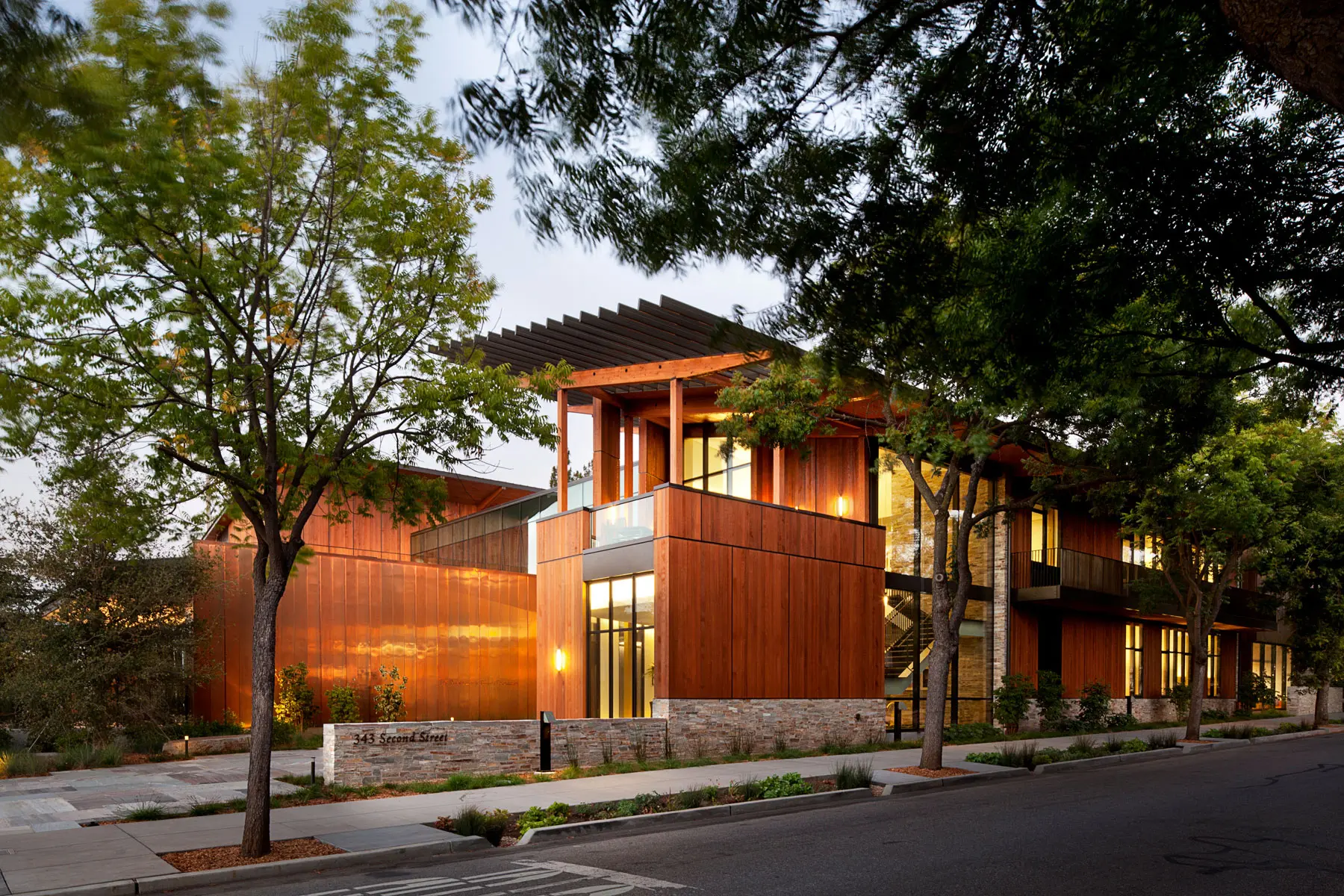
When we began the Serene Residence project, the brief was straightforward: a private family home that feels cool, calm, and connected to its landscape. What the client did not ask for, but what we considered non-negotiable, was a home that achieved this without relying on mechanical air conditioning as its primary climate strategy.
Why Passive Cooling Matters
In Vietnam's tropical climate, the default solution for thermal comfort has long been a simple one: install more air conditioning units and run them constantly. It works, in a narrow technical sense. But it creates buildings that are entirely dependent on electricity, expensive to operate, and sealed off from the natural environment they inhabit.
Passive cooling works differently. Rather than fighting the climate with mechanical force, it shapes the building itself to work with prevailing winds, solar angles, thermal mass, and evaporative effects. Done well, it can reduce or even eliminate the need for air conditioning in moderate conditions, and dramatically reduce energy consumption even when mechanical cooling is required.
Strategy One: Orientation and Solar Control
The first decision we made, before the floor plan, before the section, before any aesthetic consideration, was orientation. The Serene Residence is positioned so that its longest facades face north and south, minimising direct exposure to the harsh east and west sun that creates the most intense heat gain in tropical latitudes.
Where east and west exposures were unavoidable, we employed deep overhangs, vertical fins, and perforated screens to intercept direct sunlight before it reaches the glass. The depth of each overhang was calculated precisely for the site's latitude, deep enough to shade the glazing at peak summer sun angles, but calibrated to allow low winter sun to warm the interior during cooler months.
"The first question we ask of every site is not what it looks like, but how it breathes. That question shapes everything that follows."
— Huyen Ng, Founder
Strategy Two: Cross-Ventilation
Natural ventilation is perhaps the most powerful passive cooling tool available in a tropical climate, and also the most frequently sacrificed in the pursuit of air-conditioned hermeticism. For Serene Residence, we mapped the prevailing wind directions on site across different seasons and used this data to position openings that would create consistent cross-ventilation through the living spaces.
The central living hall is designed as a through-space: operable louvred panels on both the north and south elevations allow the family to tune the airflow throughout the day. A high clerestory at the roof ridge acts as a thermal chimney, warm air rises and exits at the apex, drawing cooler air through the lower openings below. This stack effect continues to work even when there is no breeze outside.
Strategy Three: Thermal Mass and Material Selection
The floor of the Serene Residence is finished in thick locally sourced terrazzo, a material chosen not only for its visual quality but for its thermal mass. During the day, the cool slab absorbs heat from the air and the occupants' bodies. In the evening, when outdoor temperatures drop and the house is opened up, the slab releases this stored heat slowly, keeping the interior comfortable through the night.
The roof, which carries the greatest solar load, is constructed with an air gap between the structural slab and the outer waterproofing layer, a ventilated roof assembly that allows hot air to escape before it conducts into the interior. Above this, a planted green roof adds a further layer of insulation and evaporative cooling.
Strategy Four: Water and Landscape
Water has been used for centuries in tropical architecture as a cooling agent. At Serene Residence, a shallow reflecting pool runs along the south facade. As air passes over the water surface before entering the house, it is cooled and humidified through evaporation, a measurable temperature reduction of 2-4°C on dry days.
The landscape design reinforces this strategy. Dense planting on the east boundary creates a shaded buffer against morning sun. Canopy trees to the west cast the outdoor terraces in shadow through the hottest part of the afternoon. The garden is not decorative. It is structural.
The Result
Post-occupancy monitoring of Serene Residence showed that the family uses air conditioning in the bedrooms only during the hottest months of the year, and not at all in the main living spaces. Energy consumption for cooling is estimated to be 60% lower than a comparably sized conventionally designed home in the same climate zone.
More importantly, the family reports that the house feels alive in a way that fully air-conditioned homes do not, connected to the rhythm of the day, the direction of the wind, the sound of rain on the roof. That quality of inhabitation, we believe, is what architecture at its best should deliver.
Written by Huyen Ng · Z.FSO Architecture Studio